


MATERIAL / SHADOW / OBSERVATION
A change in atmosphere
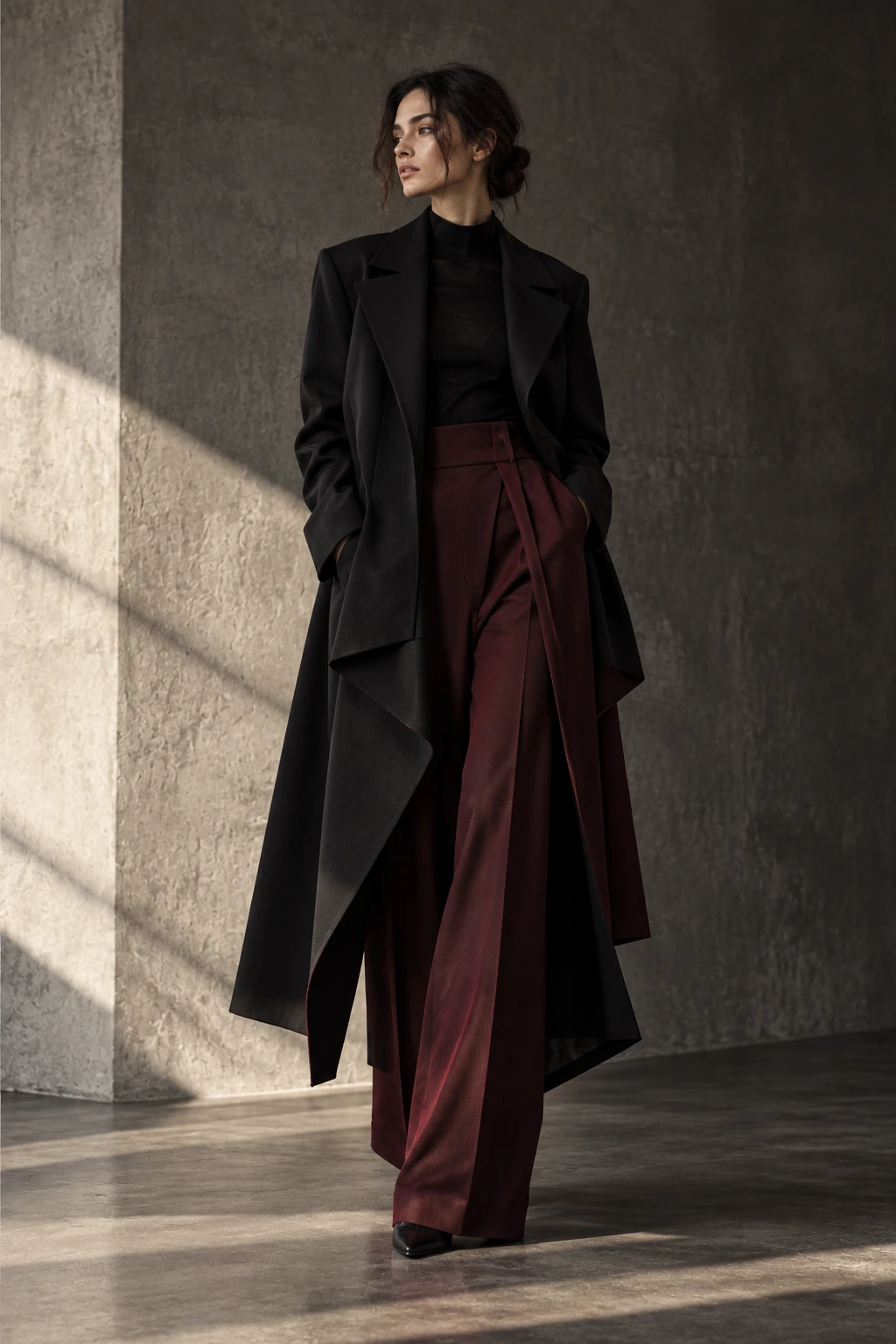
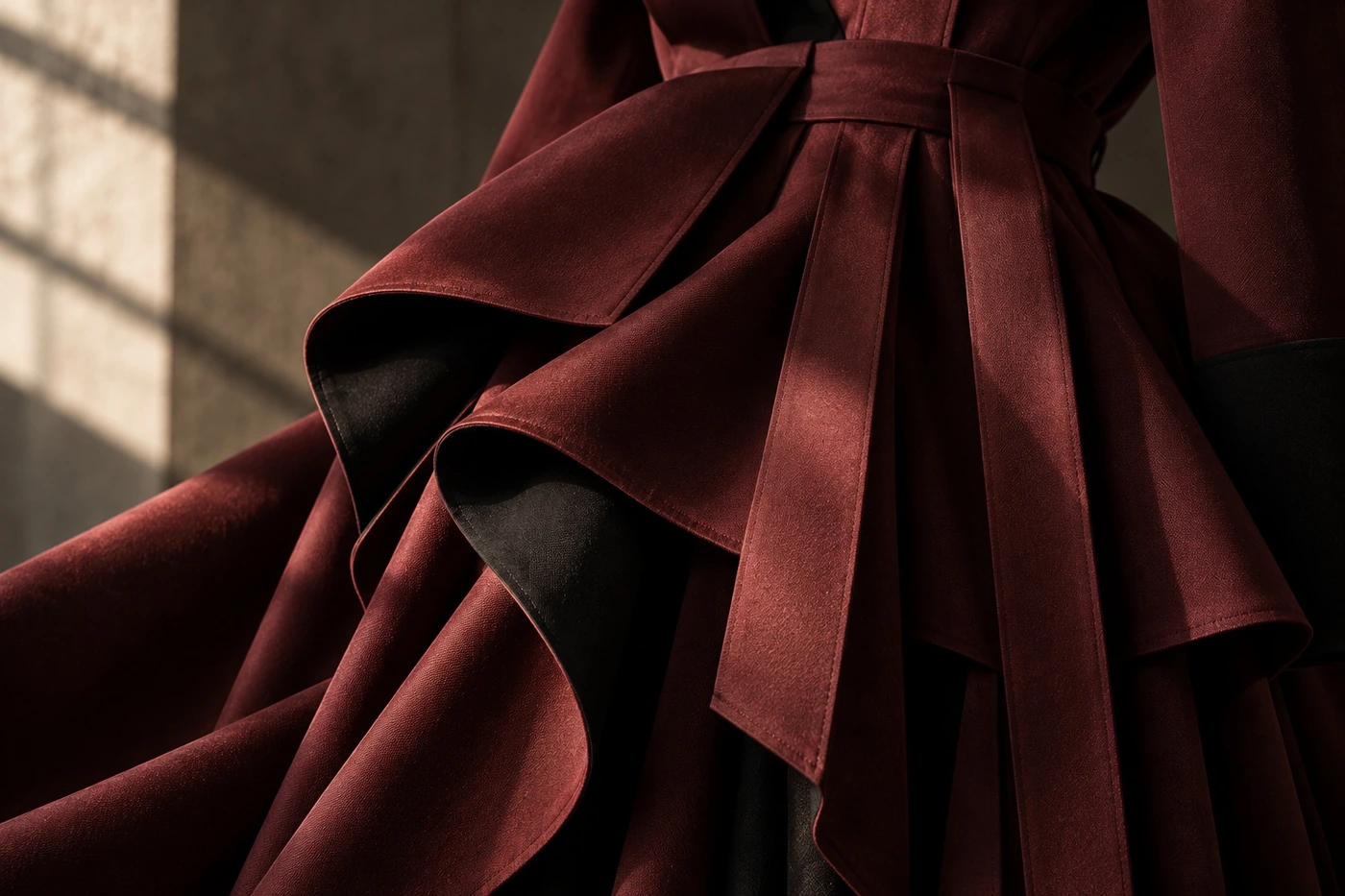
The same silhouette becomes another proposition when the light changes.
View journal noteINDEPENDENT FASHION STUDIO
COLLECTIONS / CREATIVE DIRECTION
WORKROOM NOTES / NO. 01
A sketch is an invitation. A fitting is a conversation. The most useful work often happens between them.
WORDS BY ÉLISE MOREAU / 4 MINUTE READ
01 / OPENING ESSAY
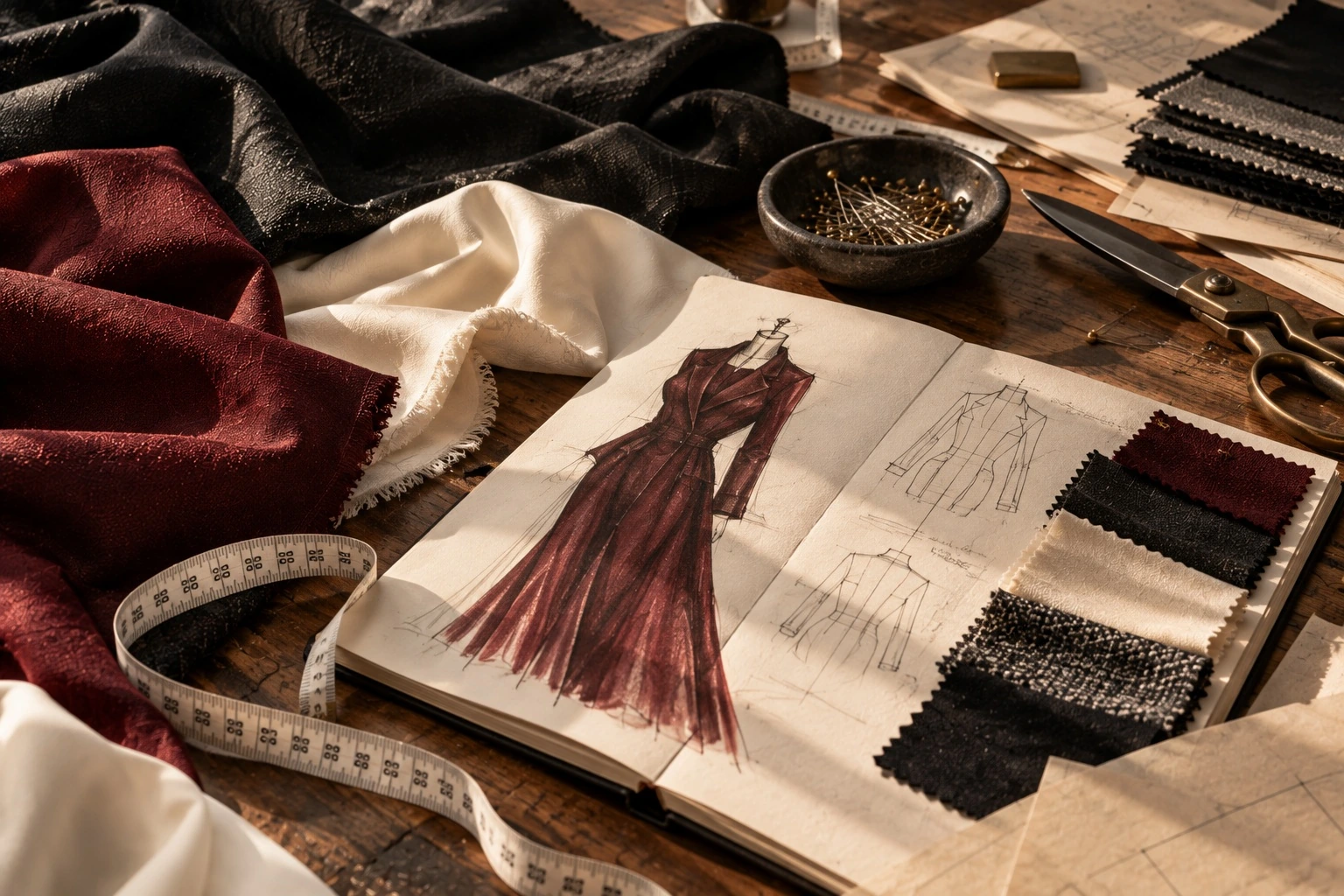
There is a moment at the worktable when an idea is still light enough to change. The paper has been cut, the fabric chosen, perhaps a first seam sewn. Nothing has settled into its final position. A sleeve hangs a little too low. A collar asks for more space. The sketch, which seemed certain yesterday, becomes a useful question.
It is tempting to hurry through this stage. An unfinished garment does not offer the clarity of a photograph or a drawing. Its allowances are exposed; its lines are held by pins. Yet these temporary marks are part of its intelligence. They show where a decision has been made and where another remains possible.
The marks on a sample are a kind of working memory. A chalk line records a proposed shift; a basted seam tests it. When a revision works, record both the change and its reason. The observations that produced a pattern are as useful as its final shape.
02 / PATTERN STUDY
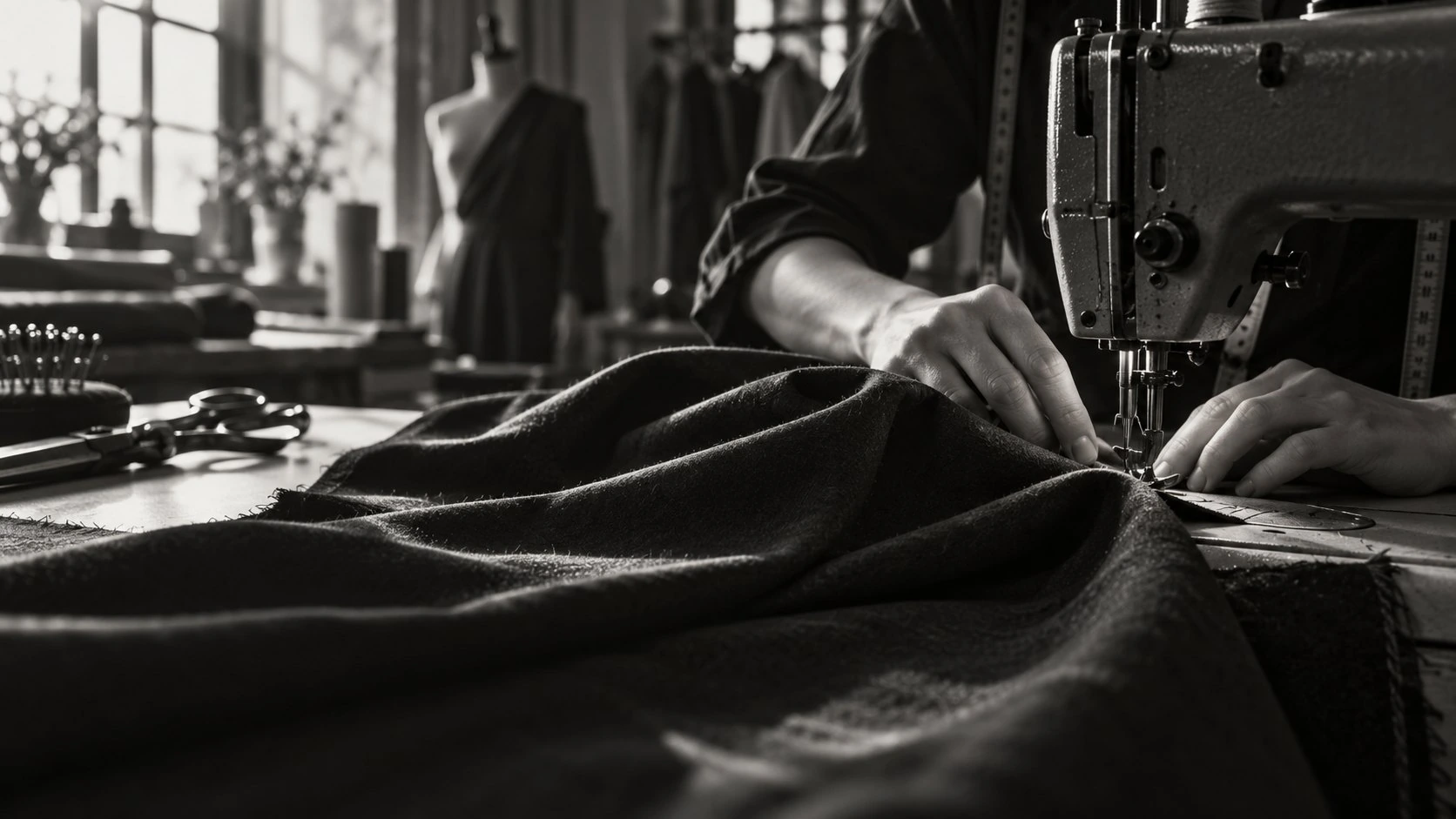
A flat pattern describes a form, but it cannot tell us everything about a piece of cloth. Leave the allowance visible. Keep a dart basted rather than closed. Those temporary decisions let a shoulder shift or a fold find another direction before the cut becomes permanent.
STUDY 01 / FRONT BODICE03 / MATERIAL & CONSTRUCTION
Two wools with the same apparent weight can hold a shoulder differently. A lining may pull a hem toward the body. A test seam lets the material participate in the decision, making the original idea more precise through contact with what is actually in our hands.
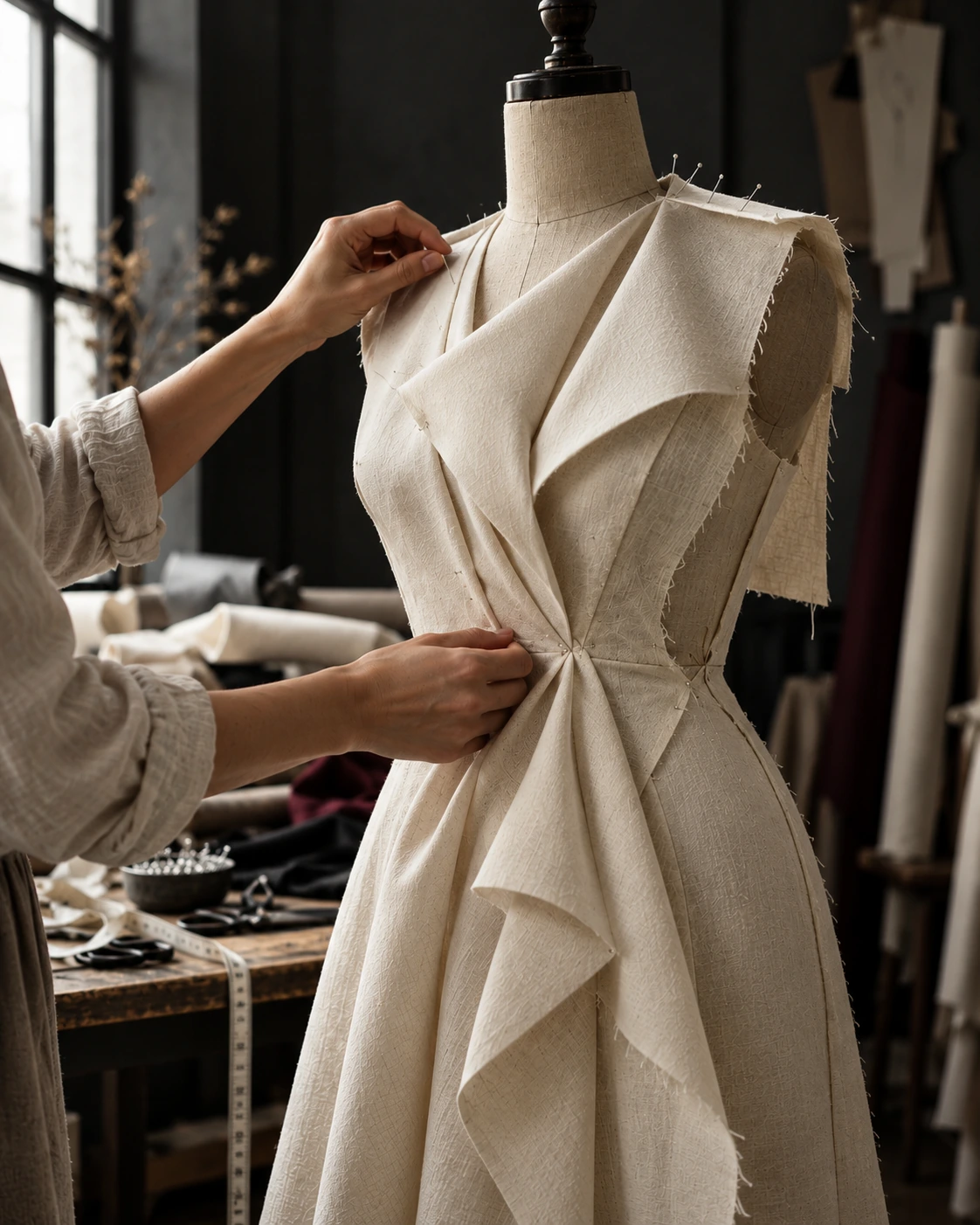
At a fitting, the garment meets a person. Ask them to reach, sit and turn. A small adjustment at the shoulder can change an entire sleeve; sometimes the line should stay where it is and the construction beneath it must change.
Completion is the point at which a garment’s decisions support one another. Leave useful allowances, accessible closures and a clear construction record. Repair and adjustment belong to design: the first fitting need not be the last conversation with the wearer.
04 / KEEP THE QUESTION OPEN
“An unfinished edge is not a failure to decide.
It is a place where another possibility can still enter.”
The drawing will change. The idea becomes stronger because it has had the chance to meet the material, the body and the hand. Regard the unfinished stage as an active part of design, and resolve only what needs resolving.
An original essay for the fictional NOIRÉ studio. Studio photographs are preview references; the toile fitting is a fictional AI-generated study.
MATERIAL / SHADOW / OBSERVATION
The same silhouette becomes another proposition when the light changes.
View journal note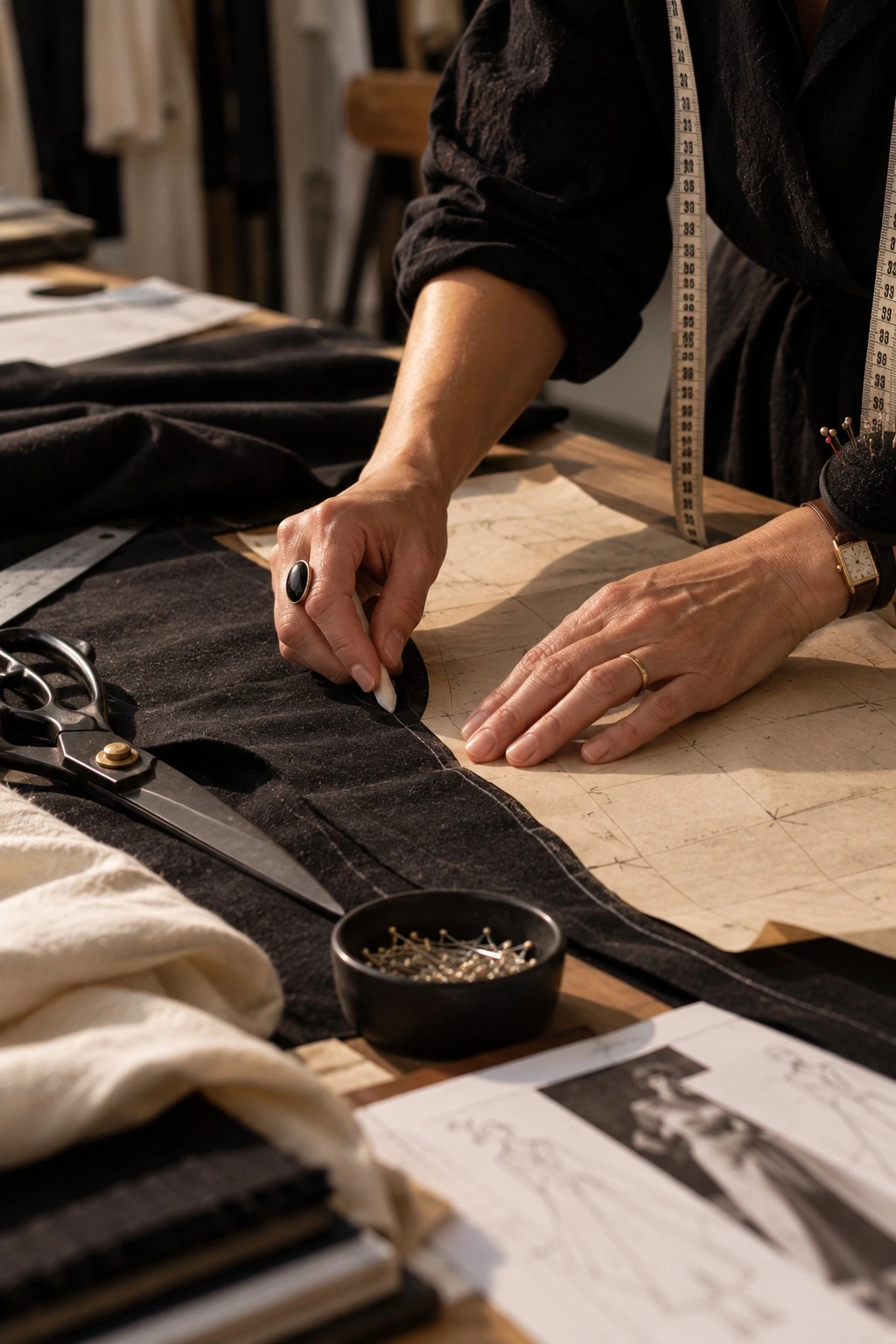
MATERIAL RESEARCH / CONSTRUCTION
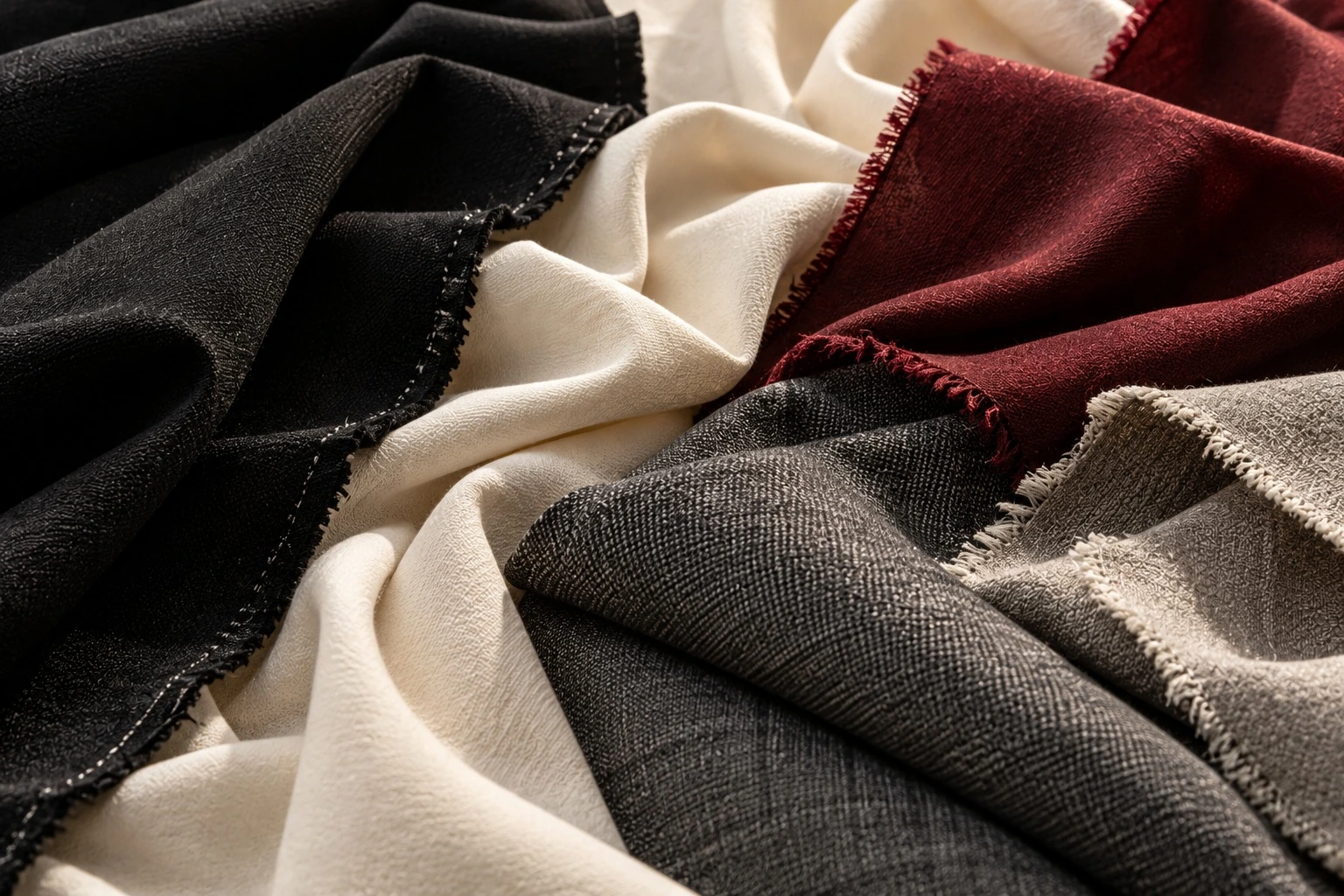
Recovery, grain and touch: listen to a textile before choosing what to make.
View journal note